
An exhibition at Diversions Fine Arts, Manhattan Beach, CA — May 9 to May 30, 2026
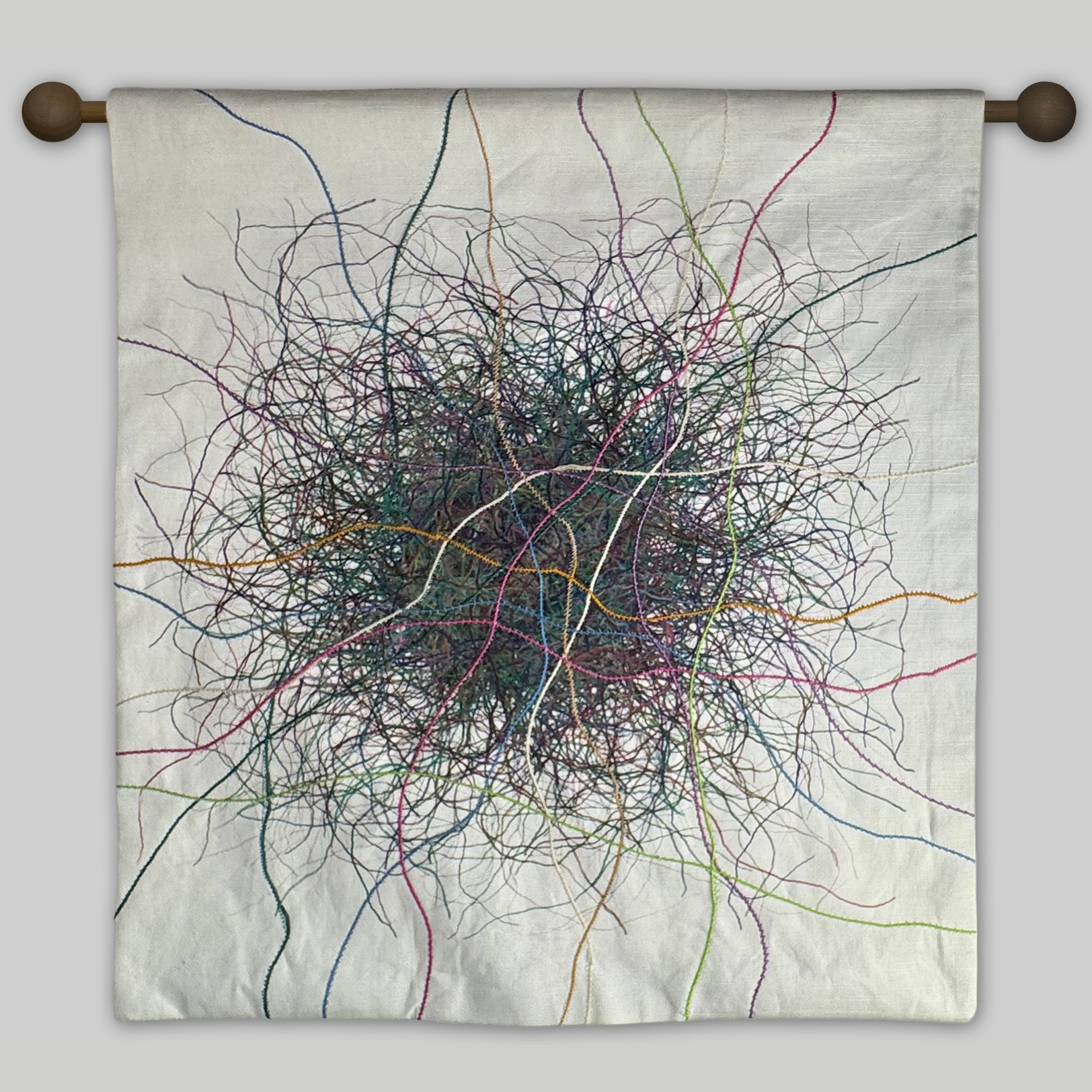
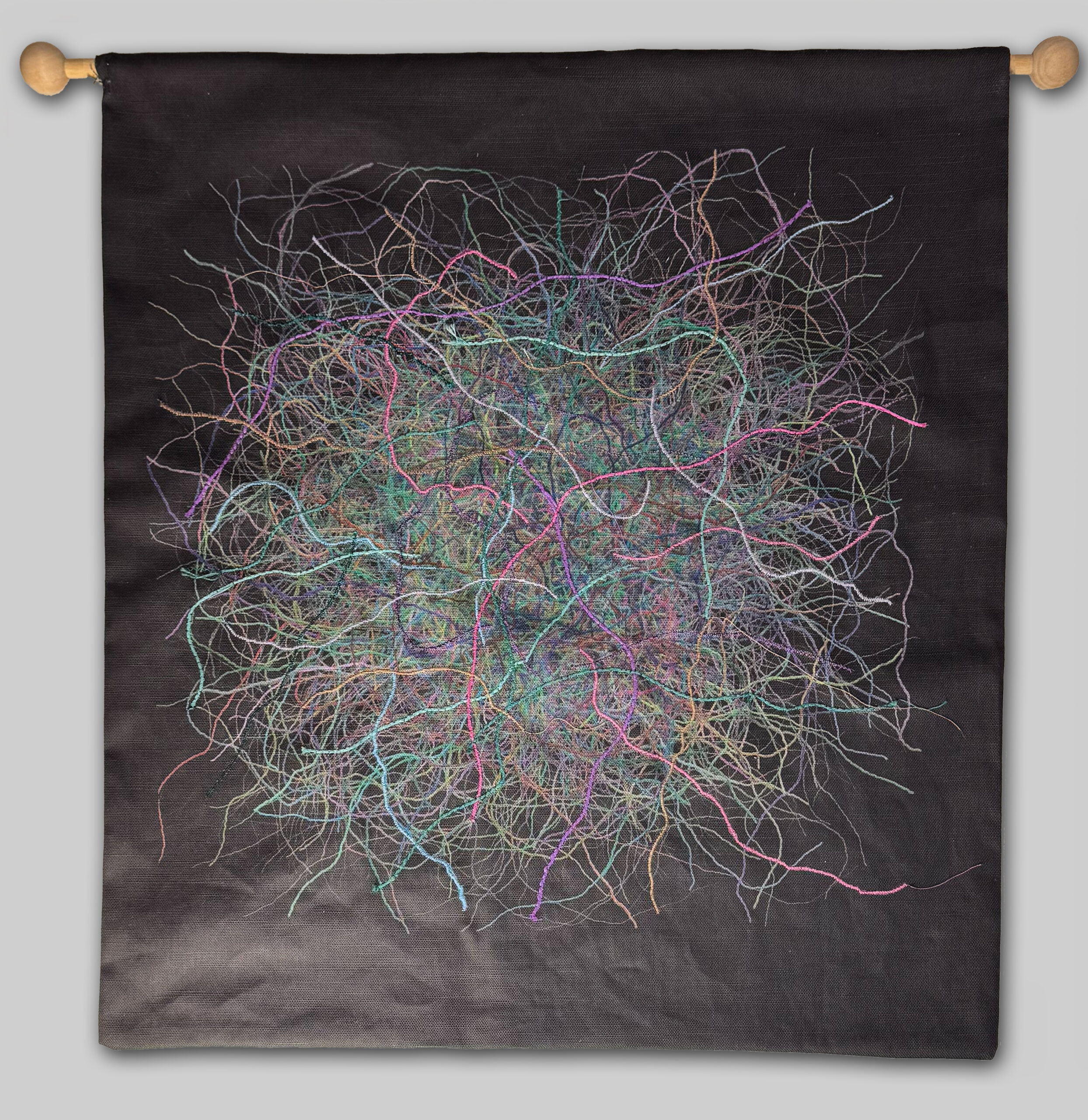
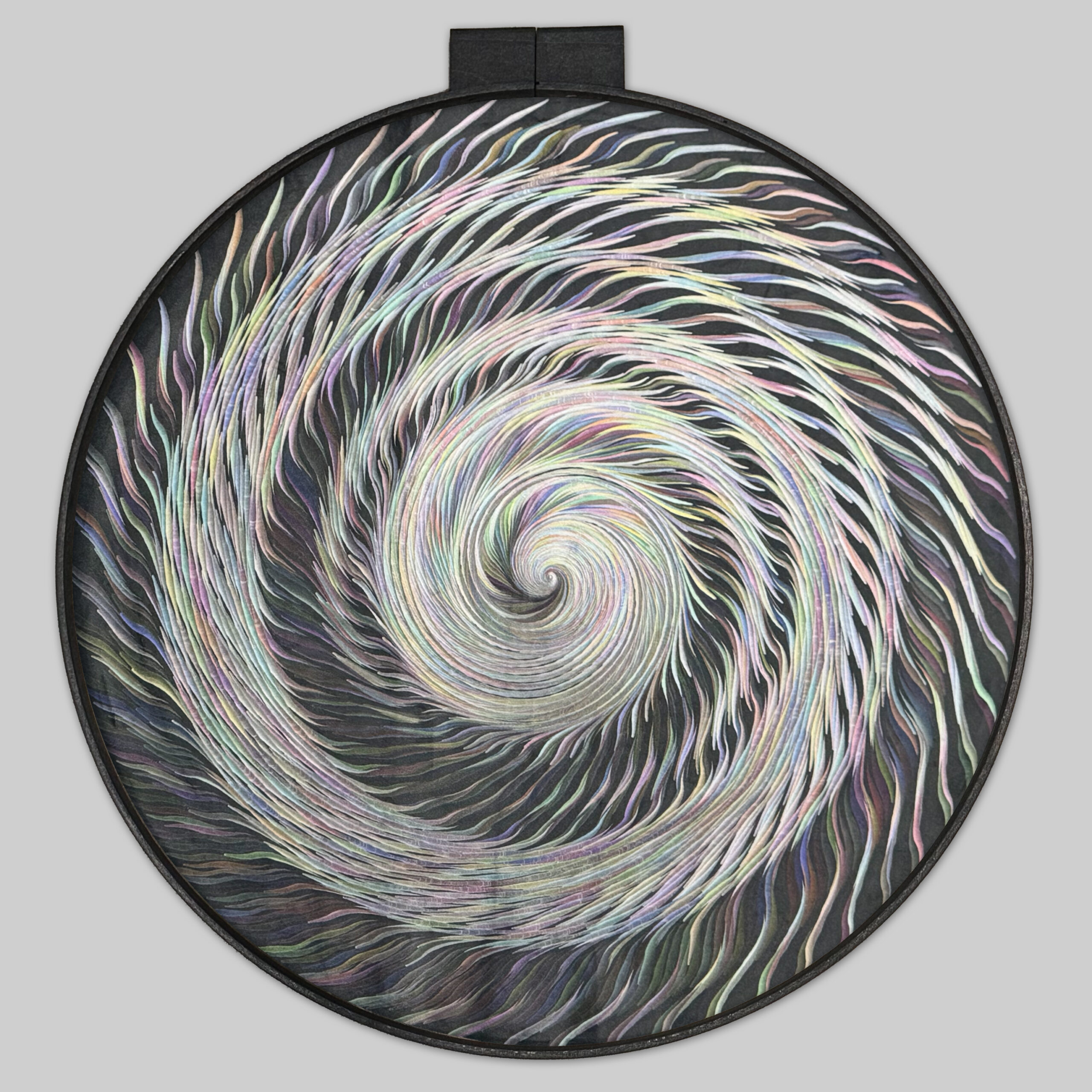
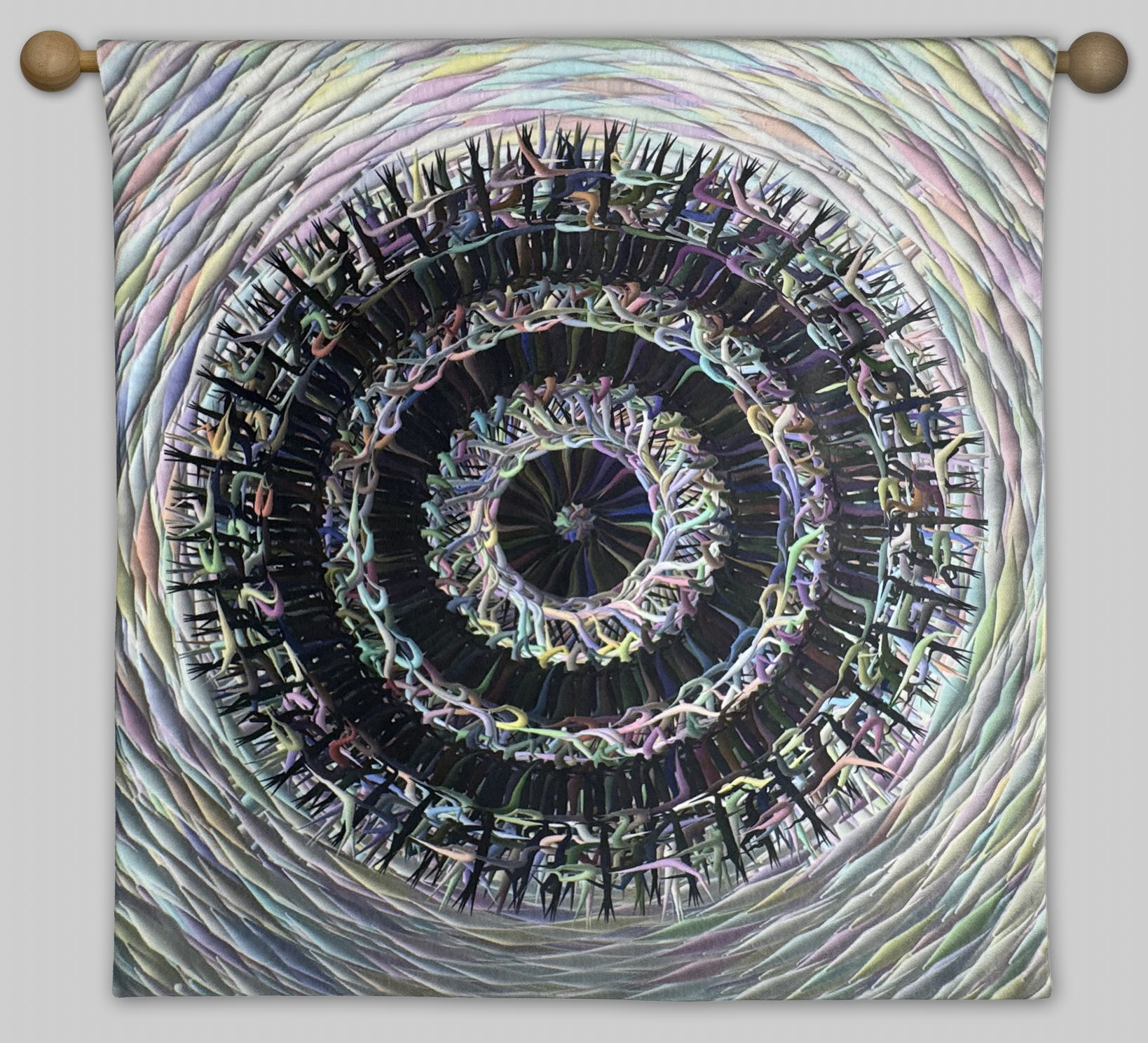
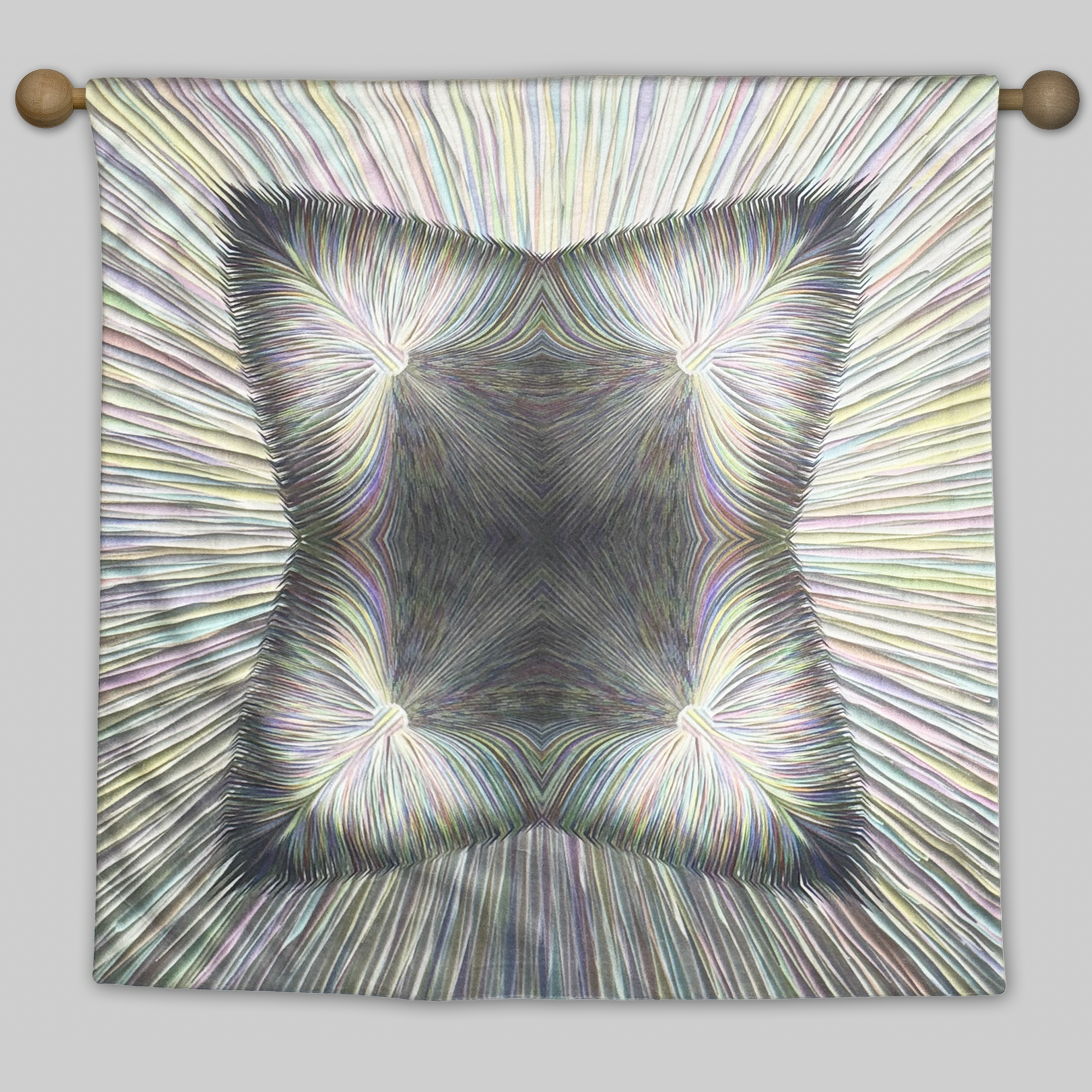
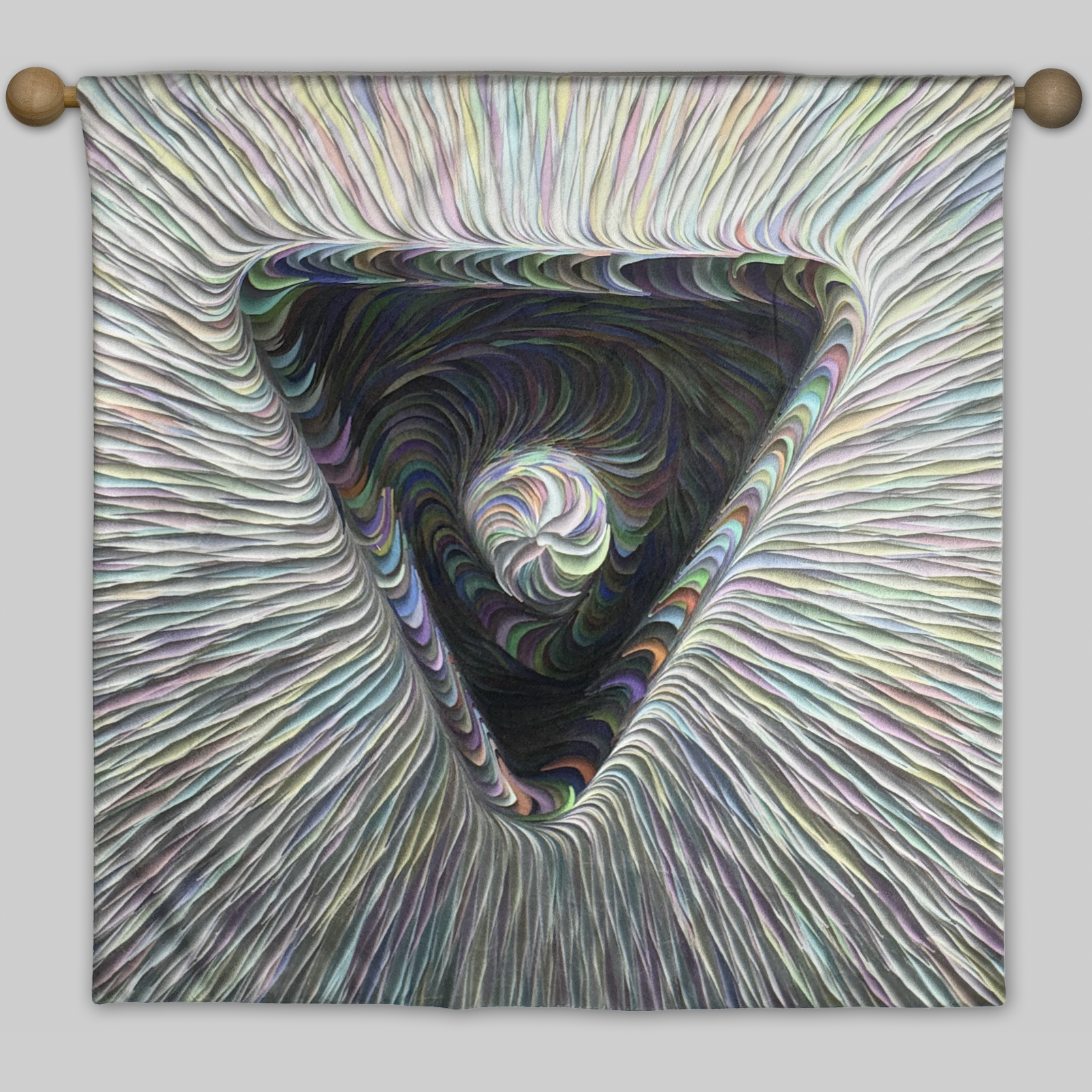
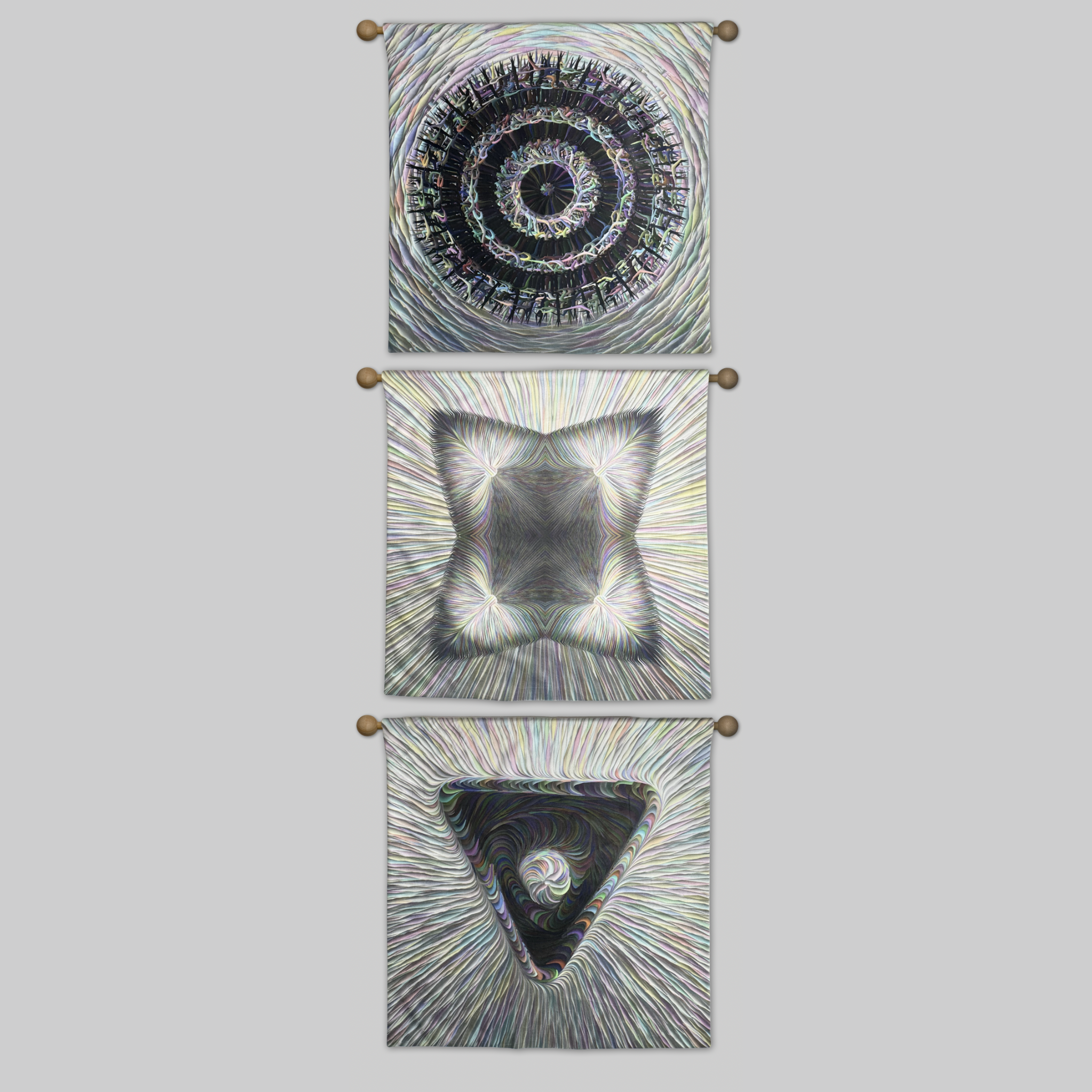
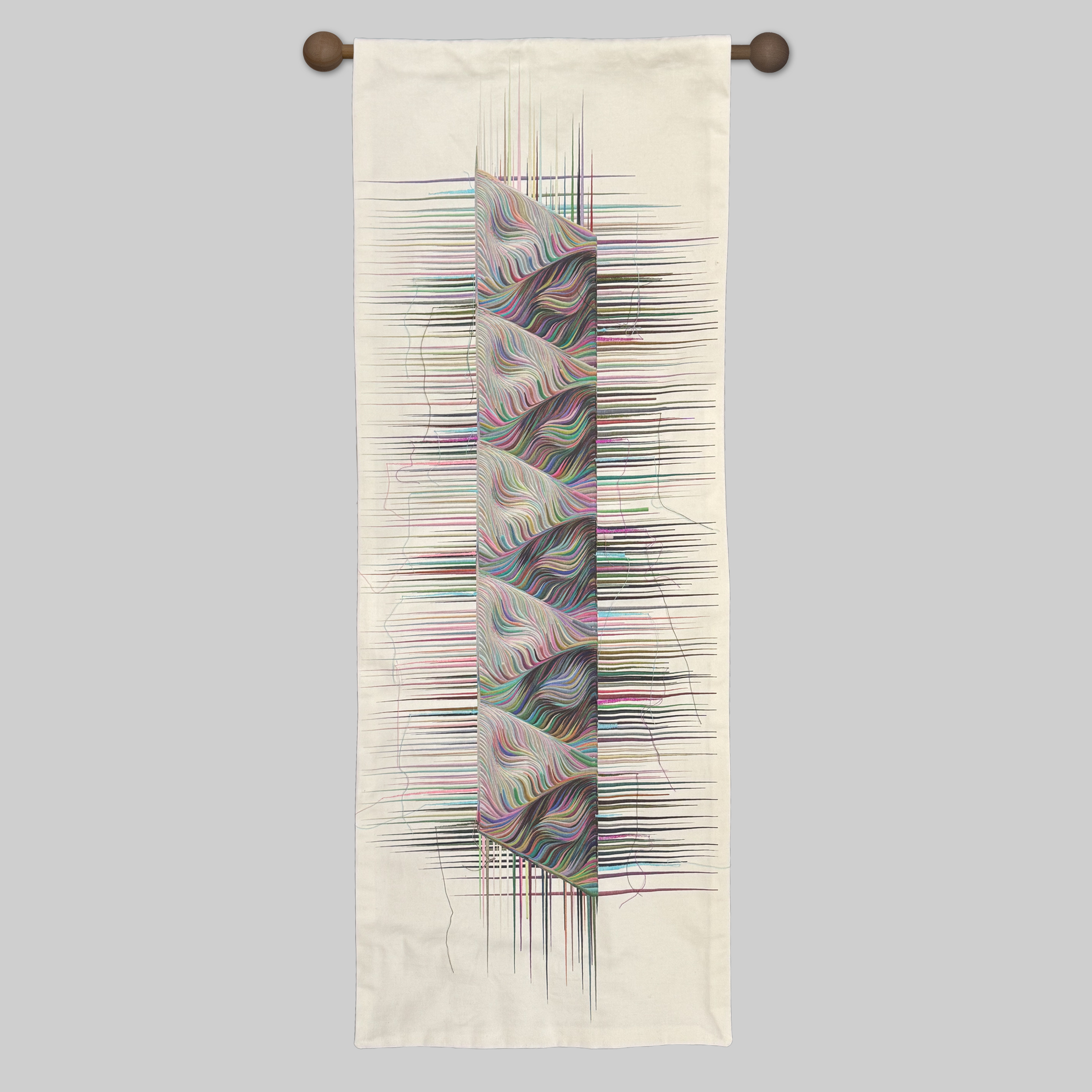
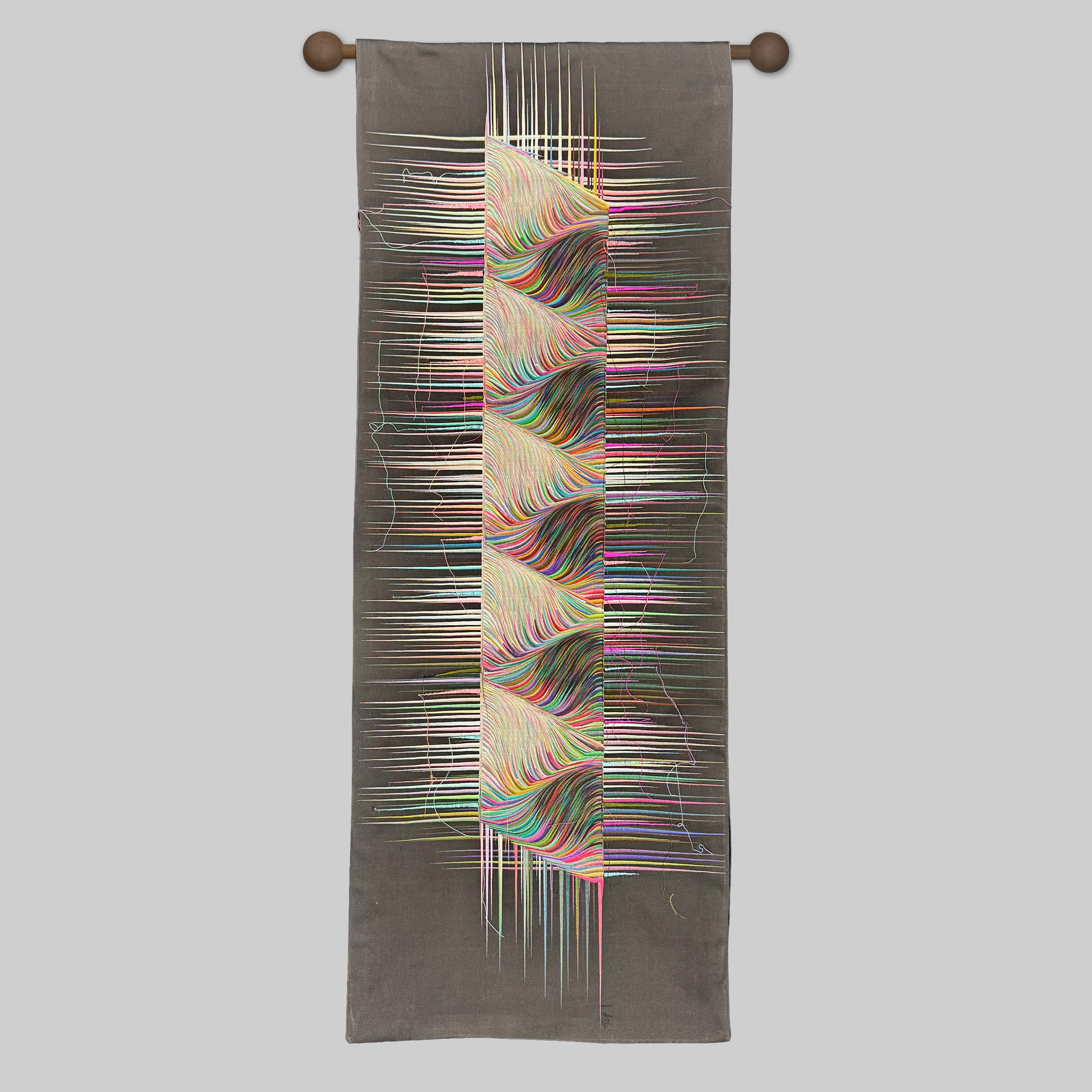
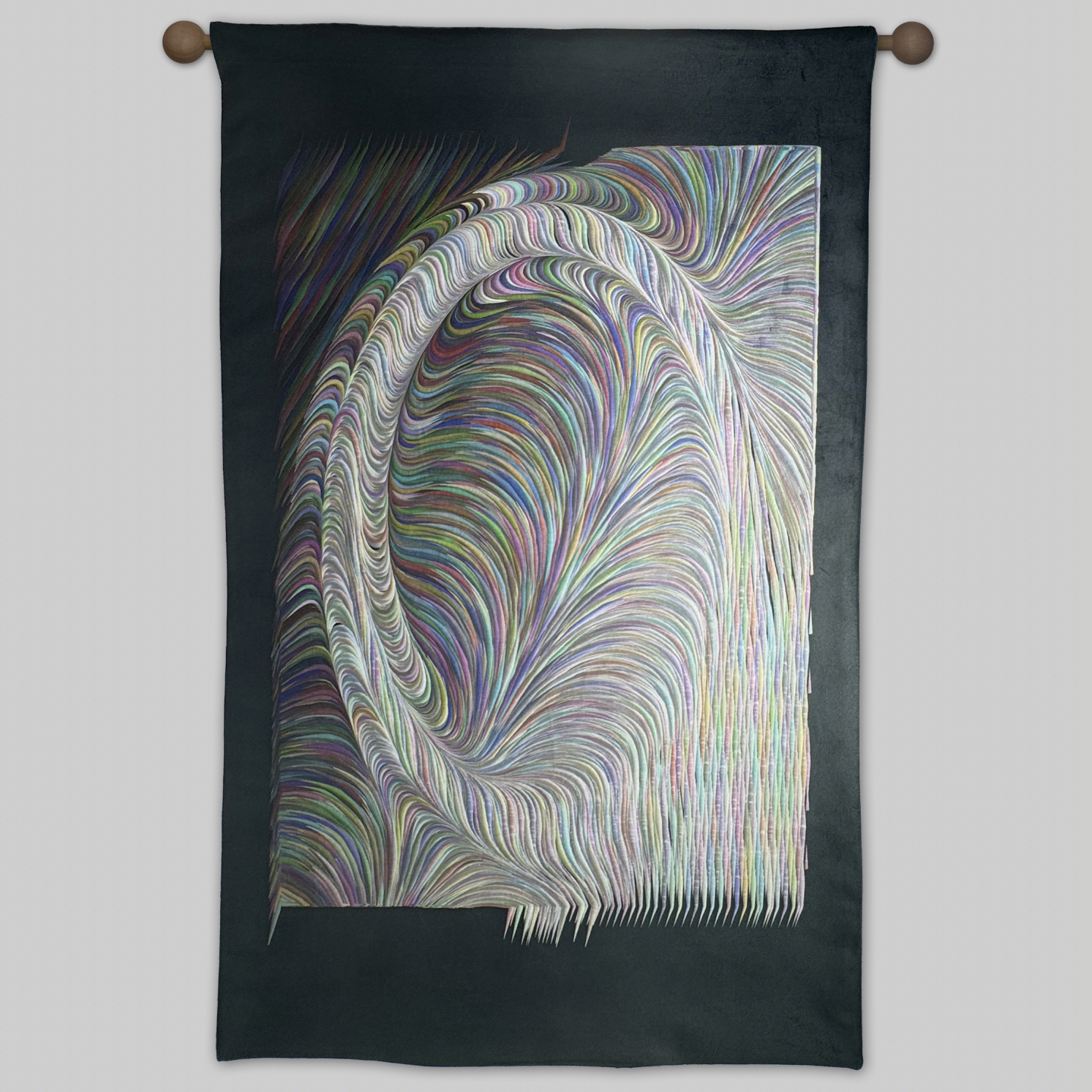
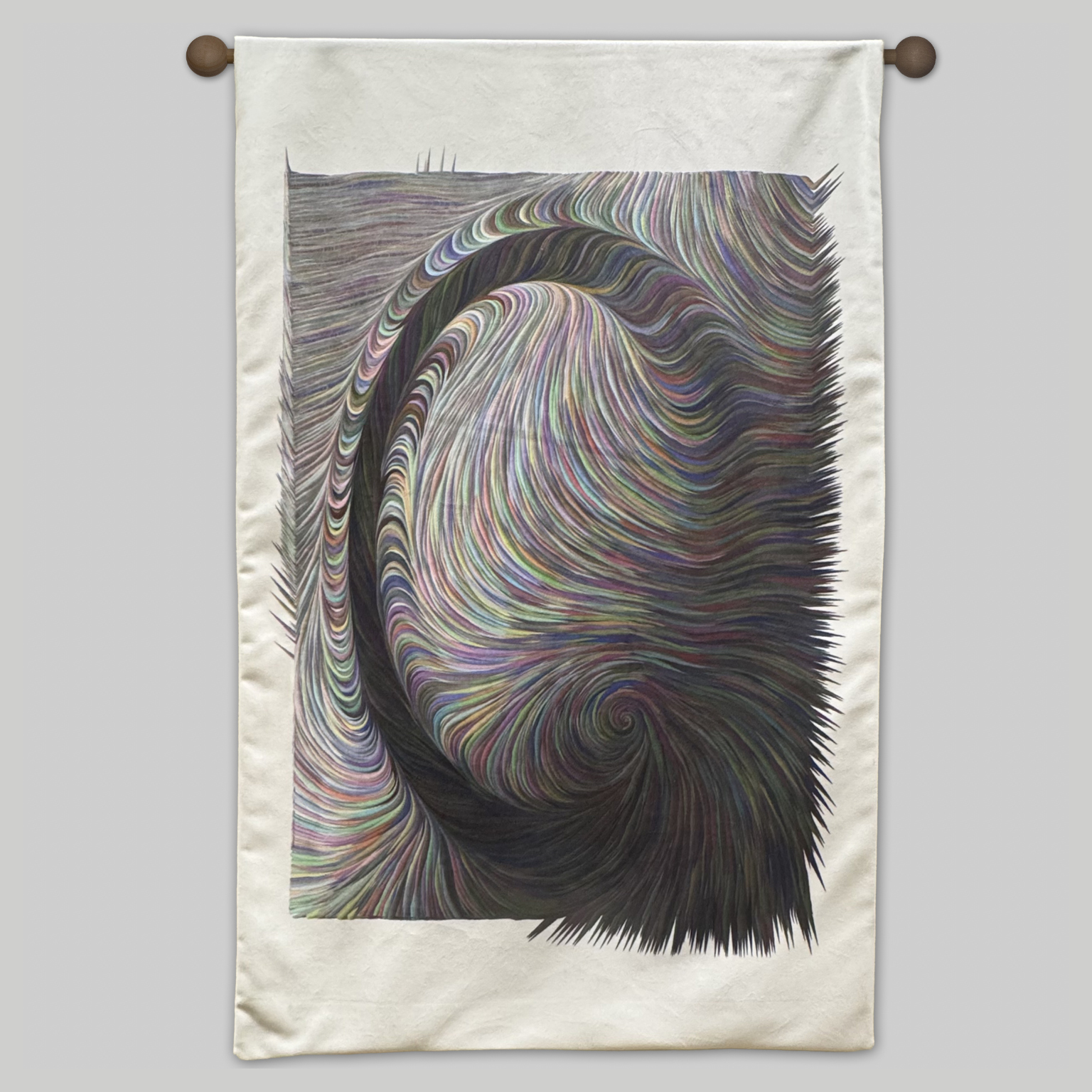
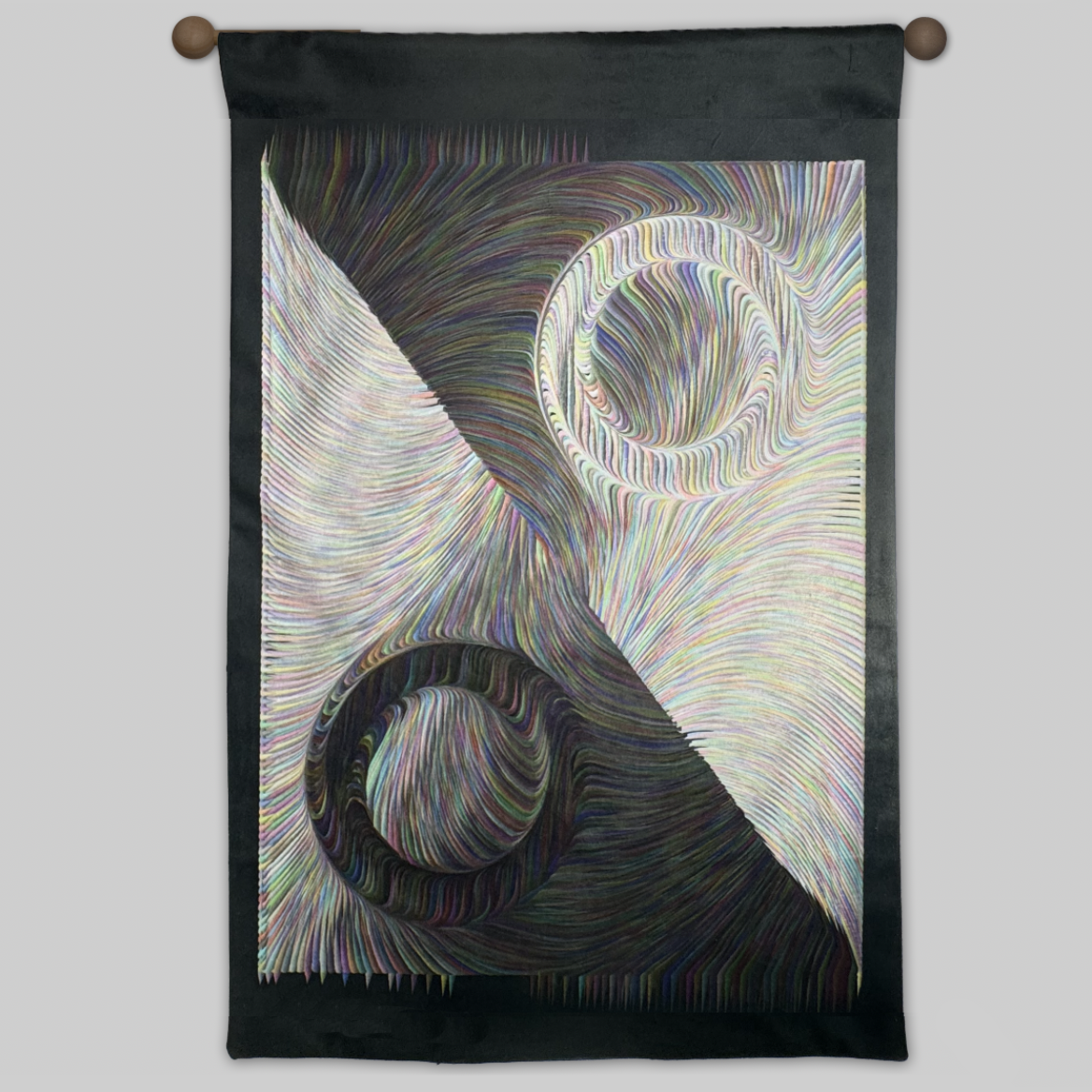
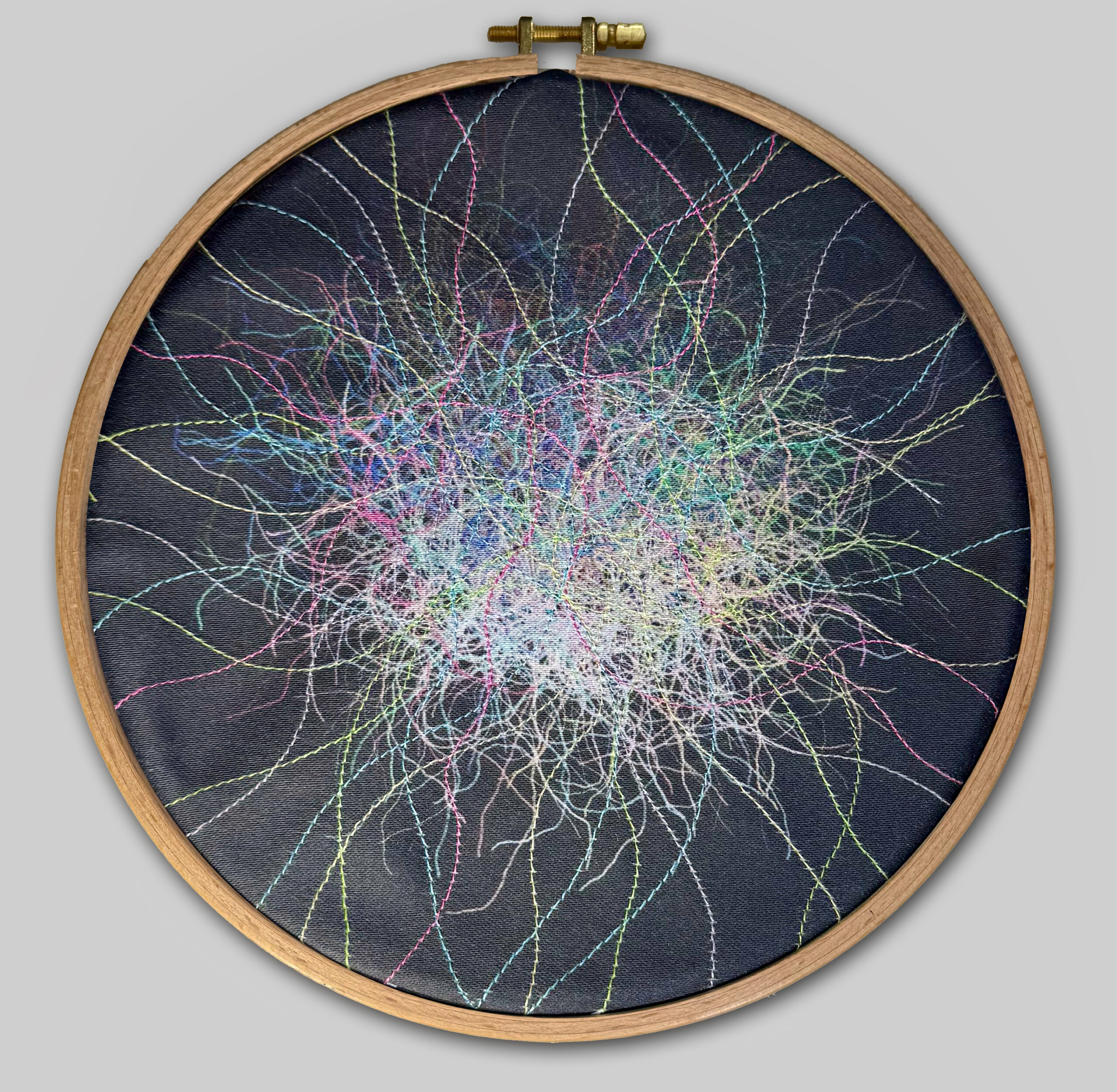
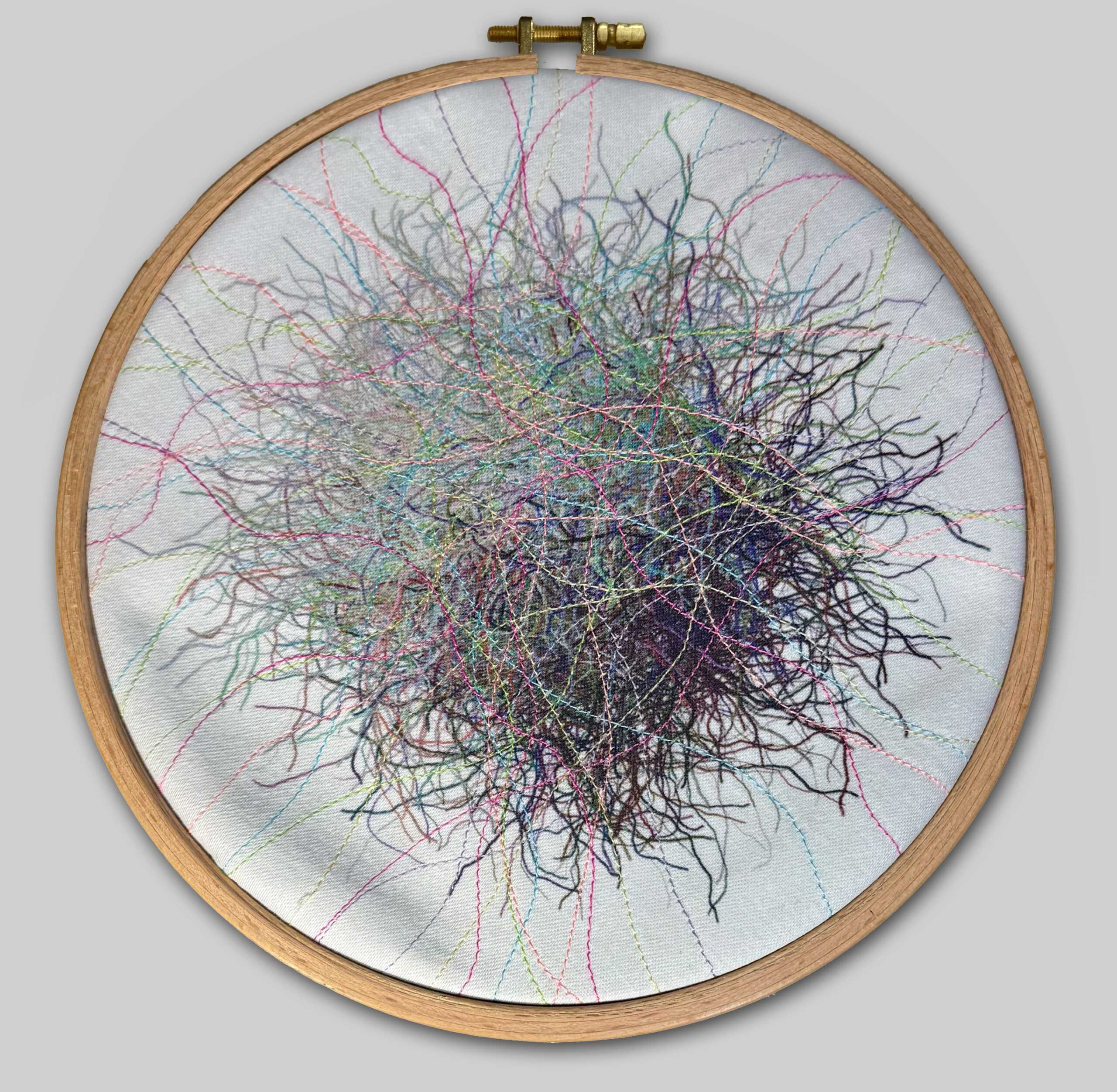
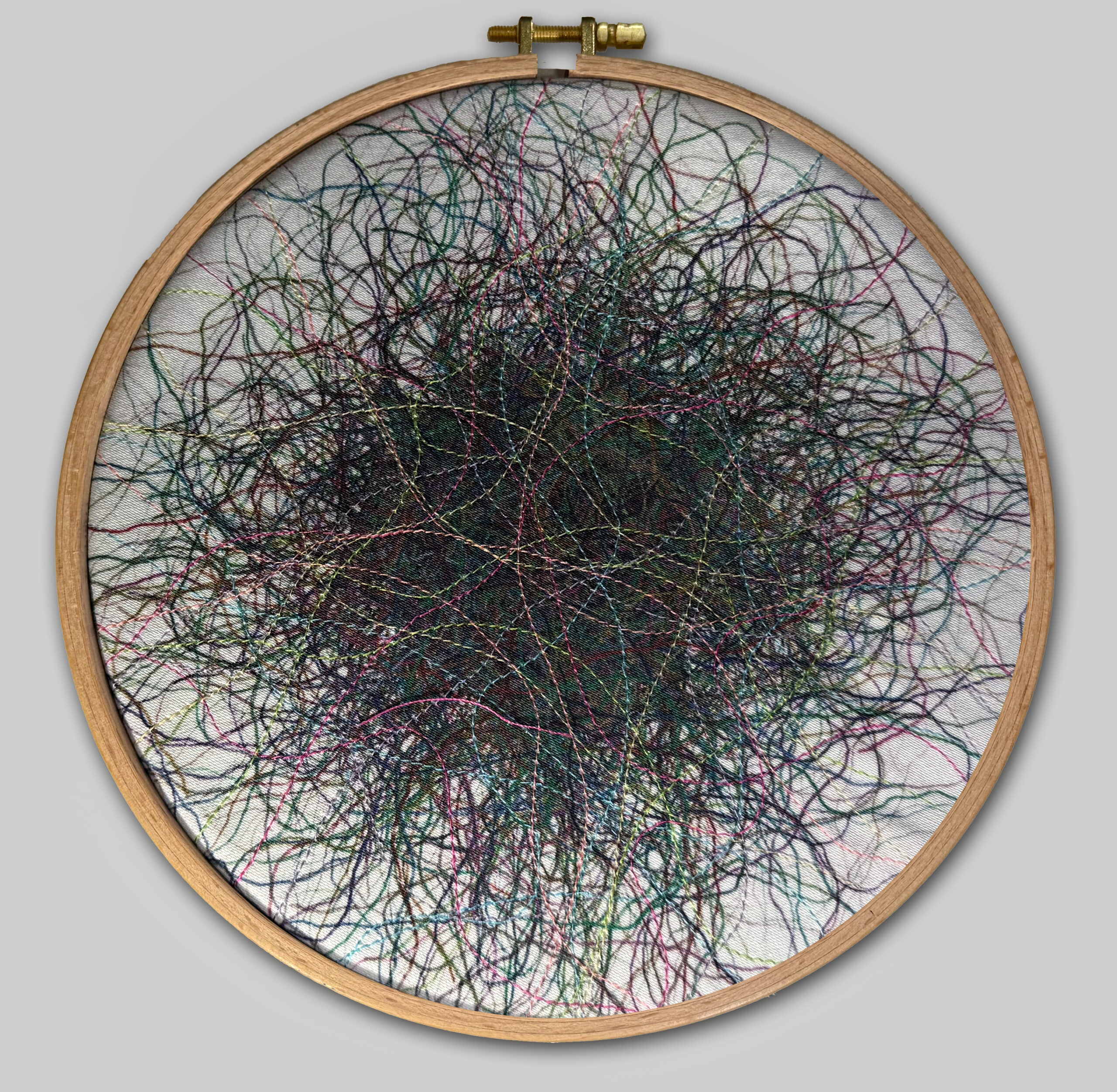
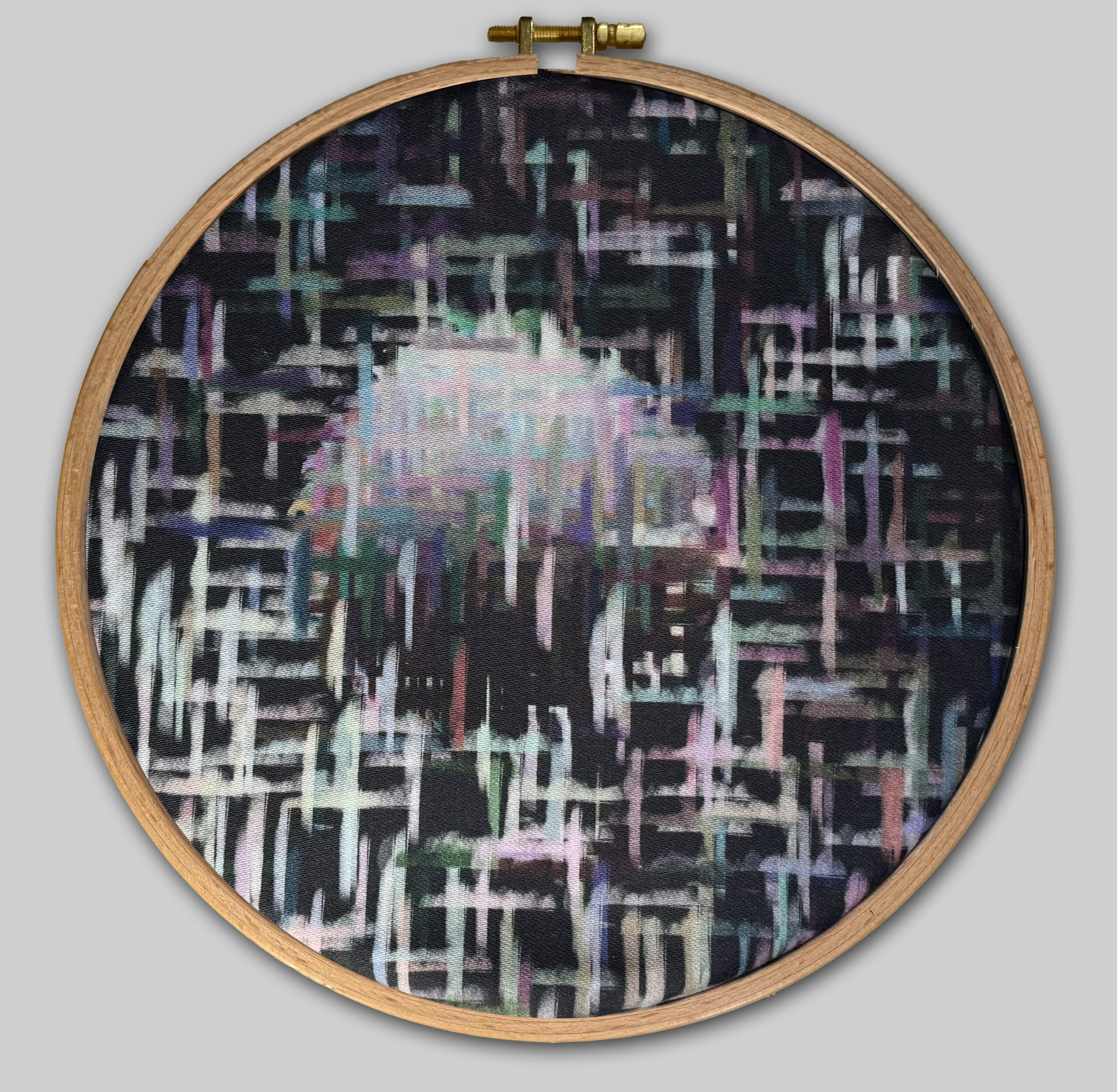
In GATEWAYS, Karen Hochman Brown’s artwork operates between digital systems and textile practice, using thread as both material and structure. She creates images through custom digital processes that mimic the behavior of fiber, then prints these images onto fabric and stitches back into them, returning the work to a physical surface. This movement between code and handwork forms a continuous loop, where each stage becomes a point of passage from one system into another.
This approach draws on a shared lineage between computation and textile production that is often overlooked. The first computers were looms, where thread functioned as a carrier of encoded information. Despite this connection, textile work has historically been coded as women’s labor and undervalued, while digital technology has been positioned as technical and authoritative. By bringing these systems into direct dialogue, she challenges that division and emphasizes their common structures of repetition, pattern, and logic.
“Experiencing Hochman Brown’s uniquely energetic forms and fascinating process is indeed a gateway to a new dimension, one in which her lush digital constructs [are] manipulated into a variety of art forms that dazzle with their own inherent mixture of line, shape, and movement. Whether working in time-based video or with fabric hangings that feature overstitching to accentuate the underlying print, her images are blissfully hypnotic.”
–Genie Davis
The images begin as grayscale digital constructions that establish form and spatial relationships. Color is not applied as a surface layer but emerges through variation within the digital process, introducing instability into an otherwise ordered framework. This interplay between structure and emergence is echoed in the physical work. Digital construction allows for responsiveness and iteration, while stitching is slow, repetitive, and tactile. Both processes require sustained attention, creating different but related forms of focus.
Hoop Dee Doo
Across the work, threads unravel and gather. Lines loosen, tangle, and reconnect, moving between fragmentation and cohesion.
These gestures reflect how memory and knowledge are carried, altered, and re-formed across generations, particularly through the labor and practices of women. In this context, sewing becomes both continuation and assertion of authorship and value. It reclaims a practice often dismissed as decorative and repositions it as a site of intelligence, agency, and structural complexity within a contemporary, technological framework.
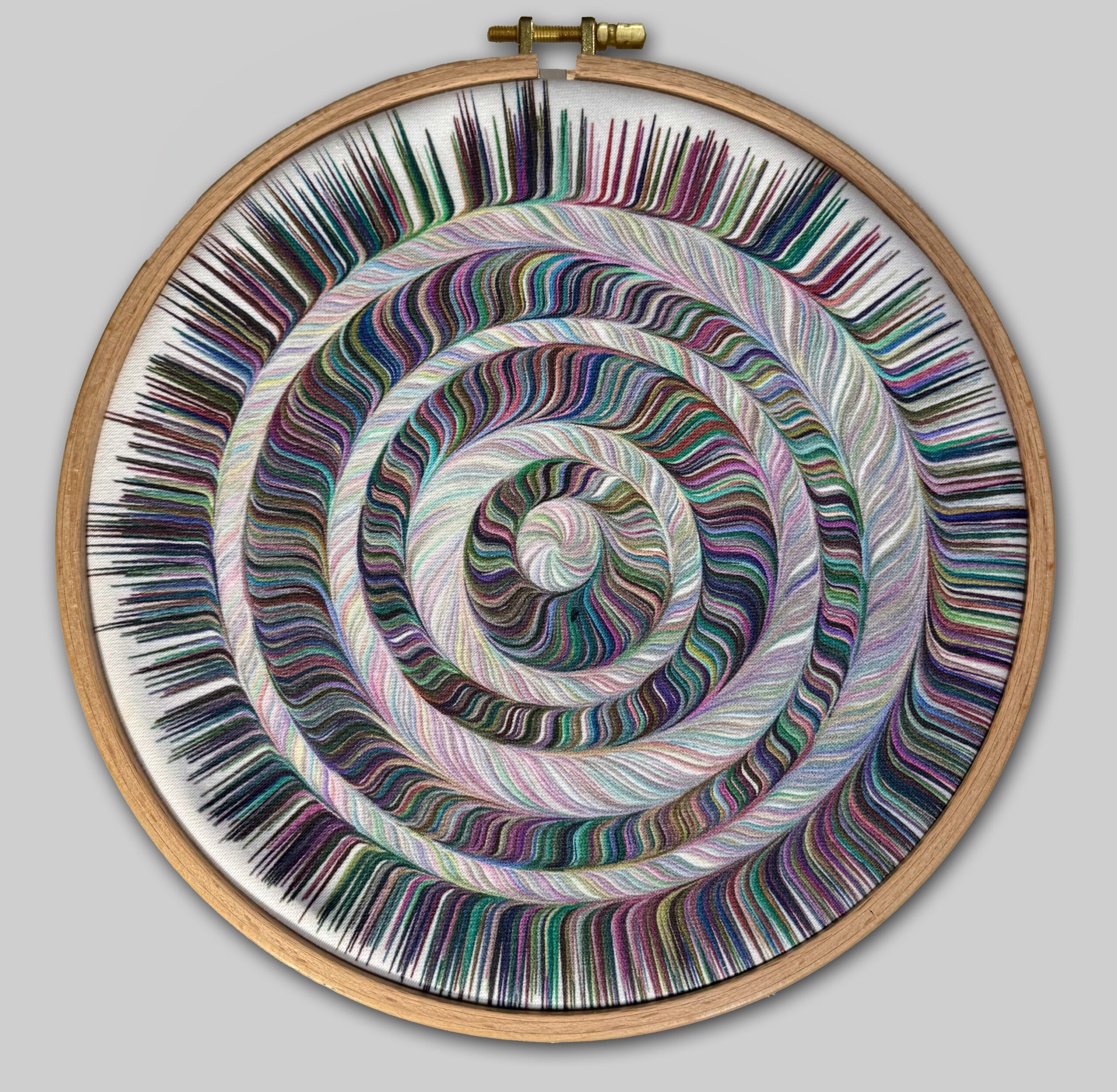
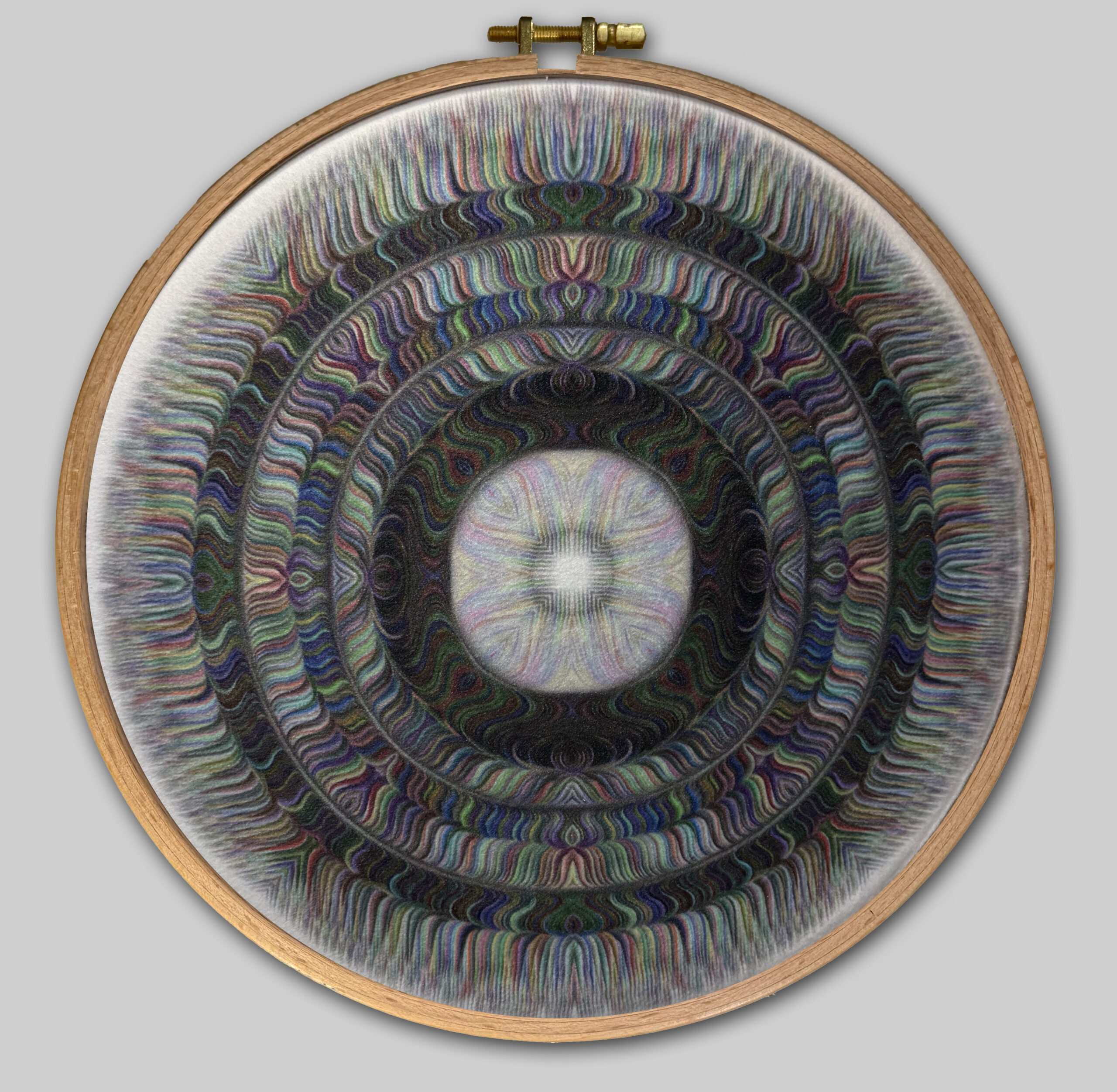
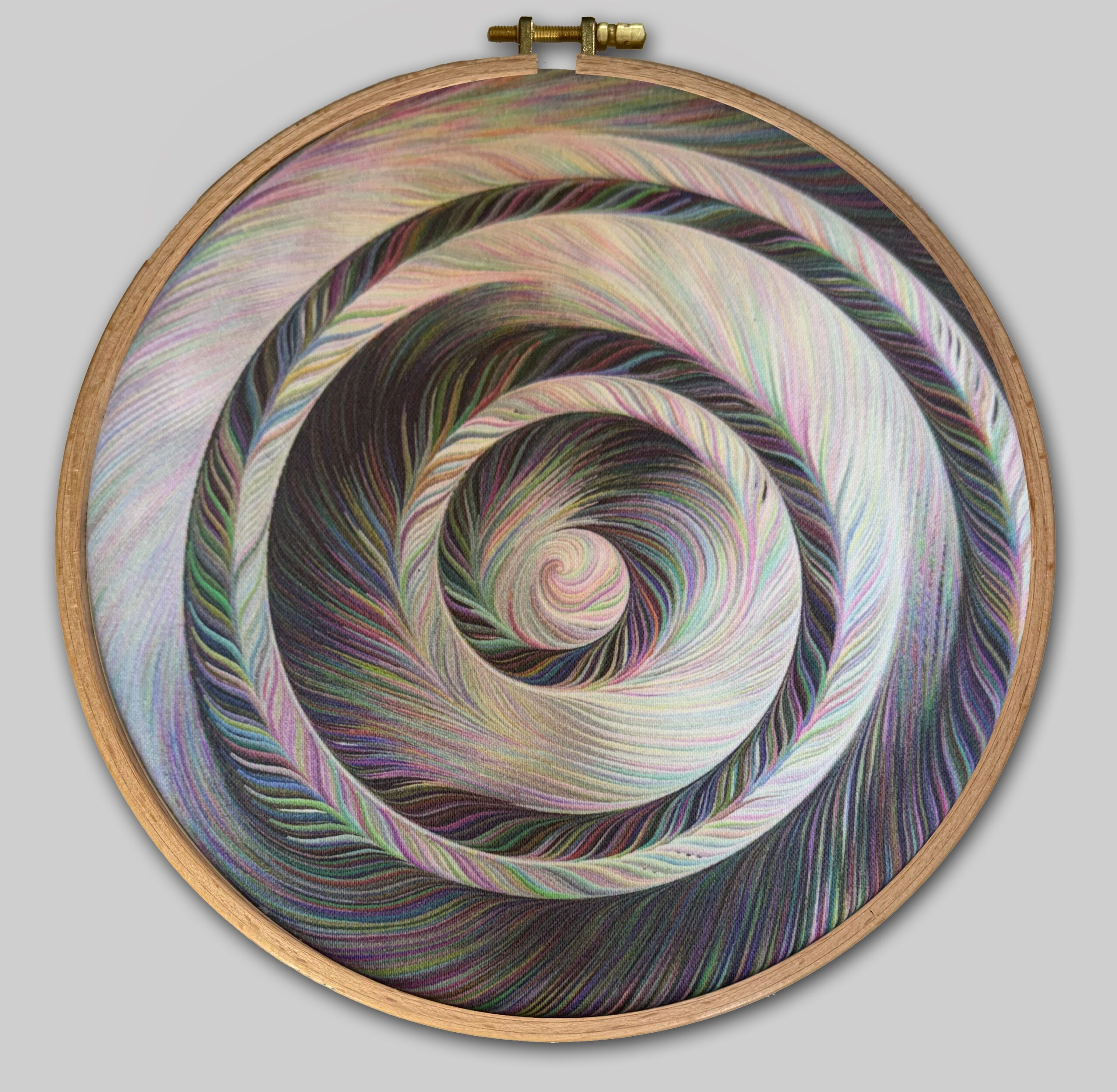
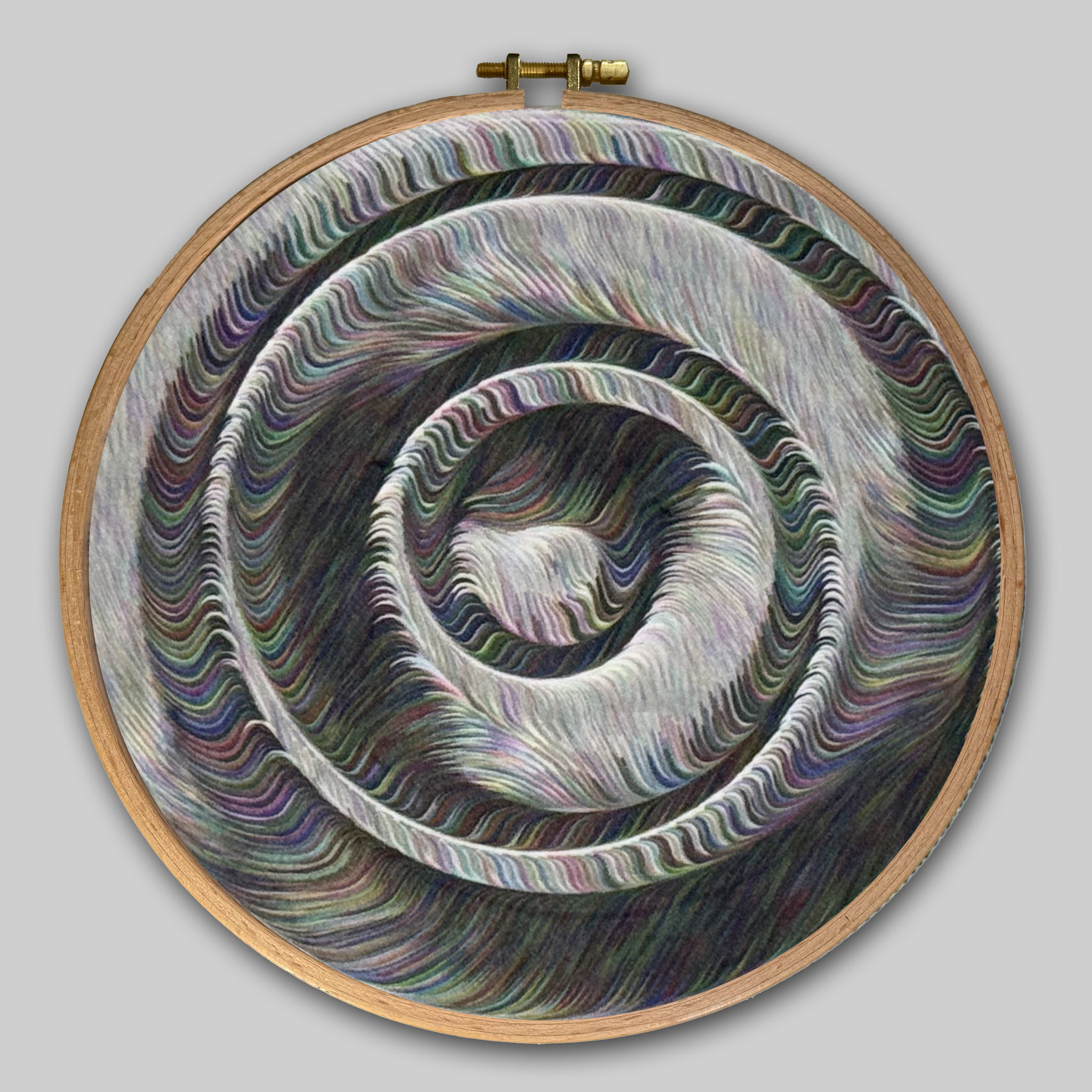
Threads in Motion
The work embraces a series of tensions that remain unresolved: hand and machine, speed and slowness, precision and irregularity, control and variation. Printed on fabric and suspended in space, the pieces retain a sense of movement and instability, responding to gravity and air. What emerges is not a synthesis, but a coexistence of systems, where structure generates unpredictability and where inherited forms are continuously reworked into something new.